Common Cleanroom Assembly Challenges in Medical Device Manufacturing
August 2026
Choosing a medical device manufacturer is one of the biggest decisions a medical device company will make when looking to outsource cleanroom assembly. Make the right decision, and production will run smoothly, regulatory submissions will be successful, and medical devices will reach patients on schedule. Make the wrong decision, and the issues can range from costly rework to failed audits and delayed market entry.
For MedTech companies evaluating contract manufacturing partners, understanding the common challenges of cleanroom assembly is essential to asking the right questions during the evaluation process. In this blog, we outline the challenges that most frequently affect medical device cleanroom assembly and explain what to look for in a manufacturing partner capable of managing them effectively.
Choosing the Correct Cleanroom Classification
Not every medical device requires the same level of environmental control. A Class 7 cleanroom suits many single-use devices, while others may only require Class 8 conditions. Choose a stricter classification than you need, and you’ll inflate the cost without adding any value. Choose one that’s not strict enough, and you risk contamination and potentially sterility issues.
This is a challenge that begins before a device ever reaches the manufacturing floor. A capable contract manufacturer should be able to assess your medical device risk classification, intended use, and sterility needs, then recommend the right classification for your device.
Maintaining Consistent Contamination Control
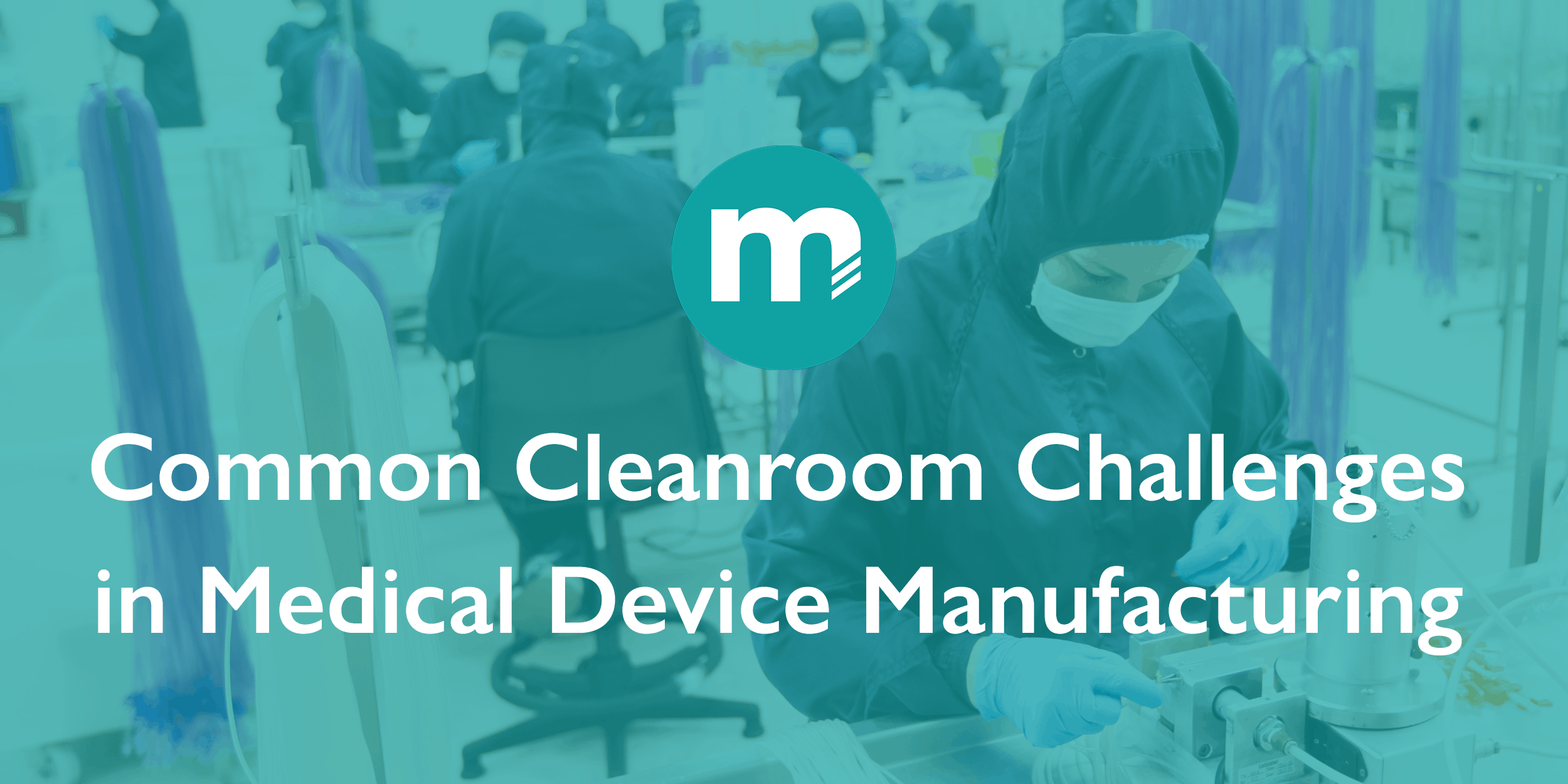
Contamination control isn’t something you get right once and then forget about. It’s an important part that should be an ongoing operational routine. Airflow, pressure, temperature, humidity and particle levels must all remain within the approved limits, all the time, not just when the cleanroom is initially signed off.
When you’re evaluating a manufacturing partner, ask how they monitor and record the performance of the cleanroom’s day to day, not just during audits. Regular monitoring, regular retesting and a clear plan for what happens when something goes wrong are all signs of a cleanroom that’s built to stay compliant, and a manufacturing partner you can put your trust in.
Managing Scale-Up Without Compromising Quality
Many medical device companies approach a contract manufacturer while still at prototype or low-volume stage, with plans to grow significantly. Cleanroom assembly presents a particular challenge here, a process that works fine at low volume doesn’t always work the same way at high volume. Things can start going wrong that weren’t a problem before.
A manufacturing partner with enough cleanroom space and experience growing production with a client can reduce this risk. If you’re thinking about manufacturing at scale in the future, check whether your chosen partner has the space and proven process
Ensuring Regulatory Documentation and Traceability
As a UK medical device manufacturer, you must show you meet UKCA requirements and, where relevant consider MHRA guidance, on top of the quality standards set out in ISO 13485. Within cleanroom assembly specifically, this means keeping thorough batch records that trace every process and component, that can be accessed quickly for review during audit.
Gaps in paperwork are one of the most common problems found during the evaluation process. Ask to see examples of batch records and component traceability documents before you commit to a manufacturing partnership. Adding proper record-keeping after production has already started can cause far more issues and disruption than ensuring it’s set up correctly from day one.
Workforce Training and Gowning Discipline
Cleanroom assembly is only as reliable as the people working within it. Inconsistent gowning, poor training, or high staff turnover all introduce product risk that no amount of facility investment can fully fix.
Established contract manufacturers typically maintain structured, ongoing training programmes covering gowning procedure, cleanroom behaviour, and device-specific assembly technique, with staff retested regularly. This is harder to judge from the outside than facility specs on a datasheet, making it worth raising directly during supplier evaluation.
Sourcing Compatible Materials and Equipment
Materials used inside a cleanroom must meet strict standards, they can’t shed particles and must resist microbial growth, and any equipment used must be approved and validated for cleanroom use. Introducing a new material or tool into an existing cleanroom process without proper qualification can compromise the entire assembly environment.
This is one reason why the link between assembly and earlier stages, such as injection moulding tool sourcing, matters. Where parts are moulded elsewhere before reaching the cleanroom, having an experienced in-house toolmaker check the design before the tool is produced helps make sure those parts are ready for cleanroom assembly from the start, avoiding problems or potential redesigns.
Choosing a Partner with Adequate Capacity
One of the most overlooked challenges is simply not having enough room. A contract manufacturer operating at or near full cleanroom capacity may struggle to accommodate a new client’s volume requirements, seasonal demands, or future growth, even if their existing quality standards are strong.
When you’re evaluating potential manufacturing partners, ask directly how much of their capacity they’re currently using and what plans they have to expand. A manufacturer actively adding cleanroom space is usually better placed to support a long-term partnership than one already close to full.
Choosing the Right Cleanroom Assembly Partner
Every one of these challenges can be managed with the right contract manufacturing partner. When you’re weighing up your options, look past the headline facility specs and ask detailed questions about how they classify cleanrooms, how they monitor them, their experience scaling up production, their paperwork, their staff training, how they check materials and equipment, and how much space they have available.
At Meridian Medical, our ISO 13485-certified cleanroom facilities in West Sussex are built to handle these challenges, backed by over 35 years of experience in single-use device manufacturing. To discuss your cleanroom assembly requirements, get in touch with our team.
FAQ’s
What's the difference between an ISO Class 7 and Class 8 Cleanroom?
It comes down to how many airborne particles of a certain size are allowed per cubic metre, for example, Class 7 is 10,000, whereas class 8 is 100,000. It depends on your medical device’s risk classification and intended use to which class you need.
Do UK medical device manufacturers need UKCA marking?
Yes. Alongside meeting ISO 13485 quality standards, UK manufacturers need to show compliance with UKCA marking requirements and, where relevant, MHRA guidance. Remember the manufacturer is the legal company responsible for the device. The company who physically assembles the device is often just the supplier.
How do you know if a contract manufacturer has enough cleanroom capacity for my project?
Ask directly. Find out how much of their current capacity is in use and whether they have plans to expand. A manufacturer already running near full capacity may struggle with your growth, seasonal spikes, or scale-up down the line.
What should I check in a manufacturer's batch records before signing a contract?
Ask to see real examples of their traceability documentation, not just a description of their process. Gaps in paperwork are one of the most common issues found once production is already underway, and they’re far harder to fix later on.
Can a manufacturer switch materials or equipment in an existing cleanroom process without requalifying them?
No, any new material or tool needs to be validated for cleanroom use first. Materials must resist microbial growth and not shed particles, so swapping something in without proper qualification can compromise the whole environment.
Speak to a UK Medical Device Contract Manufacturing Expert
Contact us today to discuss how Meridian Medical can support your next medical device project. Get in touch by filling out our online form or contacting us at 01903 732344 or info@meridian-medical.com.
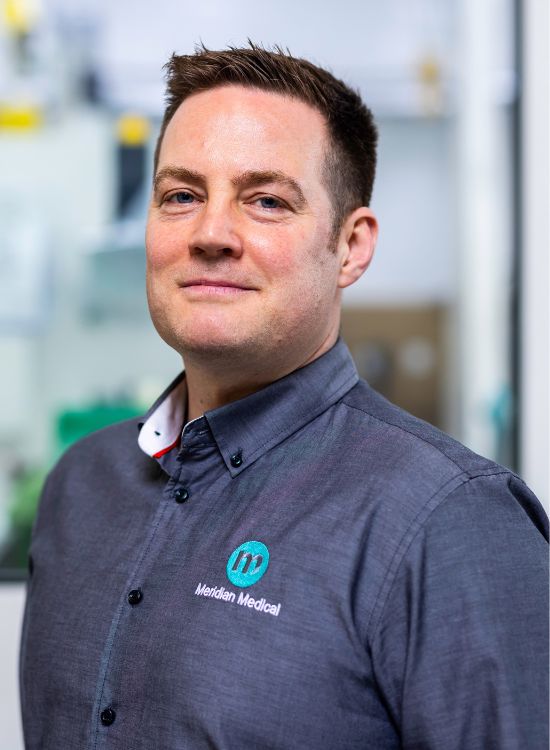
Author: James Fenton, Managing Director
James Fenton, Managing Director of Meridian Medical since 2017, has over 20 years of industry experience. He has been pivotal in developing and producing over 500 types of single-use medical devices, including CE-marked class 2 and 3 devices. With a strong focus on business strategy, project management and customer support, James ensures Meridian Medical’s agility and innovation. His expertise is backed by qualifications in Business Studies and Medical Process and Equipment Validation, plus extensive industry training. James’s insights into the industry that he has dedicated his entire career to provide a bank of invaluable information aimed at increasing knowledge of and driving advancements in medical device manufacturing.