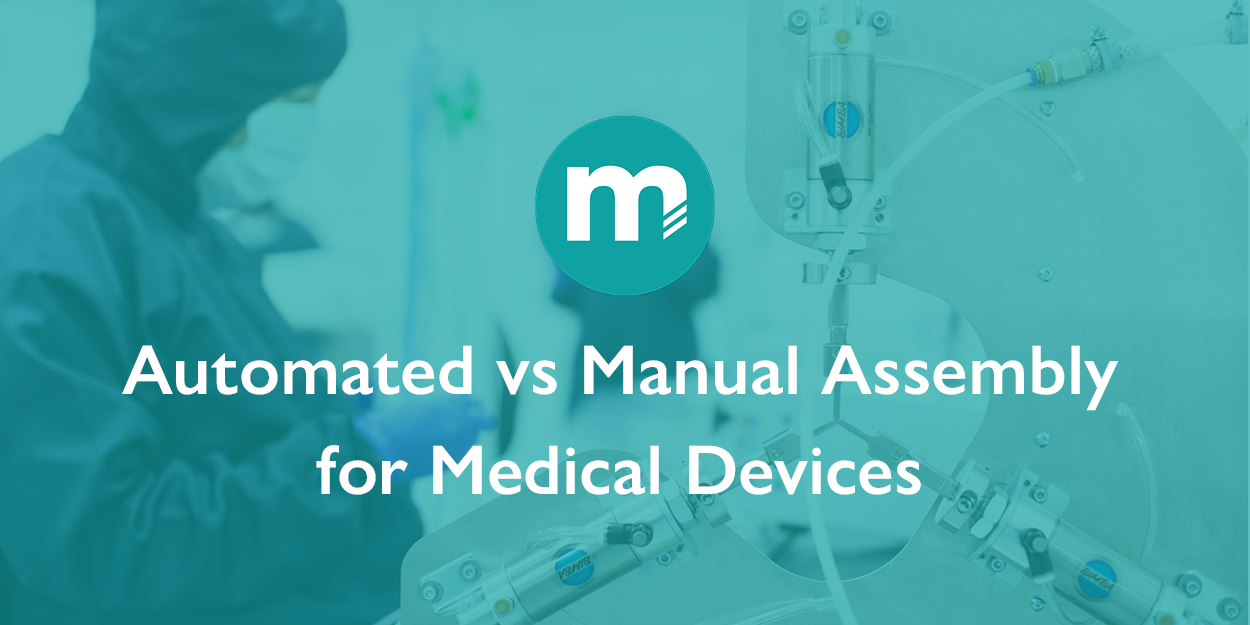
Automated vs Manual Assembly for Medical Devices: Choosing the Right Approach
October 2026
Every medical device project reaches the same decision point: should the device be assembled by hand or by machine? There is no single right answer. The most suitable approach depends on the device itself, the production volumes required and how finalised the design is.
At Meridian Medical, we assemble devices in our ISO Class 7 cleanrooms every day, and we have seen first-hand what works and what doesn’t. Here is how we approach the decision with our customers.
Manual Assembly – Flexible and Adaptable
Manual assembly is the most flexible option, and that is its main strength. Skilled operators can handle delicate components, intricate steps and a wide mix of product variants with low-cost jigs and fixtures.
It is typically best suited to projects where:
- volumes low or infrequent
- the design is still being refined and may change
- the device is small, delicate or involves a high degree of manual dexterity
- a large number of variants are needed.
There is also less likely to be tooling lead time. If the design changes, we update the work instructions, retrain the team and continue production.
The trade-off is that consistency depends on people, which is why robust training, clear work instructions and in-process checks are essential.
Automated Assembly – Consistency and Scale
Automation comes into its own when the same task must be performed in the same way, thousands of times. Machines do not tire or need breaks, and they repeat a step with a level of consistency that is difficult to match by hand.
The key benefits include:
- consistent, repeatable quality on high-volume runs
- faster cycle times once the process is established
- data captured on every unit, supporting traceability
However, automation requires a significant upfront investment, valuable space and time to design, build and validate before it can even be used in production. It also favours a stable design, because modifying a product that is already built into a machine can be costly and slow.
Where volumes are high and the design is settled, that investment can deliver a strong return. Where they are not, it can place a significant burden on the project.
Cleanroom Requirements Shape the Decision
The cleanroom class that a device requires is determined by its intended use and the level of cleanliness it must meet. This is typically set out in the design specification, and it plays a direct part in deciding which assembly method is most suitable.
Delivering that environment is your suppliers’ responsibility. In a manual cleanroom, people are a source of particles, so gowning, behaviour and training are all critical. With automated equipment, the considerations are the floor space required, the effect on airflow, and whether the equipment can be cleaned and maintained effectively in that environment.
Raising your cleanroom requirement early allows us to advise on how it affects the choice of approach and to plan the environment around it, rather than discovering issues part-way through a project.
Combining the Strengths of Both Approaches
In practice, the choice does not need to be all or nothing. Many devices are best served by a combination, automation for the repetitive steps, and skilled operators for the delicate or variable ones.
A staged approach can also work well. Production might begin with manual assembly while the design settles and demand builds, with specific steps automated as volumes grow. Designing the product with assembly in mind from the outset makes that transition much smoother.
Because we injection mould in-house as well as assemble, we can look at the whole picture, from how a part is moulded to how it is assembled. Small changes made early can simplify assembly, whichever route you take.
Questions to ask yourself
A few simple questions on your medical device design can point you in the right direction:
- Volumes: how many units do you need now, and in two or three years?
- Design stability: is the design settled, or are changes still likely?
- Variants: how many versions of the device will you need?
- Complexity: how delicate or intricate are the assembly steps?
- Data and traceability: what records do you need for each unit?
- Budget and timing: how much upfront investment and lead time can the project take?
- Payback: how quickly (if at all) does the automation pay for itself?
There are no wrong answers. They just help shape a plan that fits your product.
FAQ’s
When should a medical device be assembled by hand rather than by machine?
Manual assembly is typically the better fit when volumes are low to medium, the design is still being refined, or the device is small, delicate or involves intricate steps.
Is manual assembly less consistent than automated assembly?
Not necessarily. Consistency in manual assembly depends on people, which is why robust training, clear work instructions and in-process checks are essential. With these in place, skilled operators can deliver reliable, repeatable results. Automated processes are highly repeatable, which can also mean that during production small tolerance changes can produce a large amount of scrap.
Can we start with manual assembly and move to automation later?
Yes, and it is a common route. Production can begin manually while the design settles and demand builds, with specific steps automated as volumes grow. Designing the product with assembly in mind from the outset makes that transition much smoother.
Does the cleanroom class affect which assembly method we choose?
It can. The cleanroom class is determined by the device’s intended use and is typically set out in the customer’s specification. It influences factors such as floor space, airflow and how equipment is cleaned and maintained, so it is best raised early in the project.
Speak to a UK Medical Device Contract Manufacturing Expert
Choosing between automated and manual assembly doesn’t have to be a leap in the dark. If you’re planning a new device, or rethinking how an existing one is made, we’re always happy to talk it through.
Contact us today to discuss how Meridian Medical can support your next medical device project. Get in touch by filling out our online form or contacting us at 01903 732344 or info@meridian-medical.com.